Turn reports, campaigns, and field material into a searchable, source-backed evidence archive.
Reports, trainings, campaign resources, webinars, briefings, and field recordings become one governed archive: use it privately with your team, publish approved resources for your communities and partners, or do both.
I can't give a full rundown of every law and benefit here — but from the archive I can pull together practical safeguards for staying safe at home, easing loneliness, and guarding against financial abuse, and show you where each comes from.
Help is easiest to arrange early — before a fall or a crisis — while the person can still choose calmly what would make daily life safer: a cleaner, a handrail, meal delivery, a medication reminder. The aim is to keep ordinary decisions with them.1
Occasional contact isn't the same as belonging; belonging needs repetition — being expected at a regular time, and missed when you're not there. The advice is to rebuild it in places you could return to three times: a senior centre, a choir, a community café.2
The warning sign is the loss of free choice — support should grow an older person's ability to decide, not replace it. It's worth watching who holds access: the bank card and PIN, the post, the conversations with institutions.3
Three things at once — archive, site, and shared discovery.
One governed archive becomes your team's evidence library, your public-facing site, and, when you choose, a path into shared civic discovery.
Archive
Everything your organization produces, gathered into one searchable evidence base.
- Reports
- Training material
- Field recordings
- Campaign resources
Site
A civil-society template that publishes your work under your own identity.
- Programs
- Reports
- Campaigns & impact
- Donation paths
Shared discovery
Selected public work can appear in shared civic surfaces, with opt-in, attribution, eligibility review, and withdrawal support.
- Opt-in per item
- Attribution kept
- Withdrawal supported
- Eligibility review
Evidence that doesn't disappear after publication.
Field material keeps working long after the project ends — reusable, verifiable, and ready for public or shared surfaces when you choose.
Field material persists
What you gather doesn't vanish once the report ships or the project closes.
Reports become evidence
Published reports turn into reusable, queryable evidence you can cite again.
Campaigns stay connected
Campaign knowledge stays linked to the source material behind it.
Claims are verifiable
Donors and partners can trace any claim back to its origin.
Approved work can be shared
Material you approve can move into public or shared civic surfaces, opt-in.
The work is already done. The evidence just isn't reusable yet.
Your reporting, training, and campaign material already exists. It can become an evidence library your team can search, cite, reuse, and share with confidence.
- —Reports buried in drives
- —Campaign PDFs used once
- —Webinar recordings forgotten
- —Field recordings lost after projects end
- —Donor evidence rebuilt by hand
- +Source-linked evidence library
- +Campaign collections
- +Searchable training material
- +Donor-ready evidence
- +Public resources ready for shared discovery
One archive, three levels of visibility.
Nothing is public by accident. Each item can stay in your private workspace, appear on your public site, or move into the shared Commons — because you put it there.
Private workspace
Internal reports, sensitive notes, and draft material stay with your team.
Public site
Approved resources, published under your organization's own identity.
Knowledge Commons
Selected public material, discoverable in a shared civic discovery surface.
Independent organizations. Shared civic knowledge.
Each organization keeps its own private archive, while approved public material can appear in a common discovery surface: the Knowledge Commons.
per item
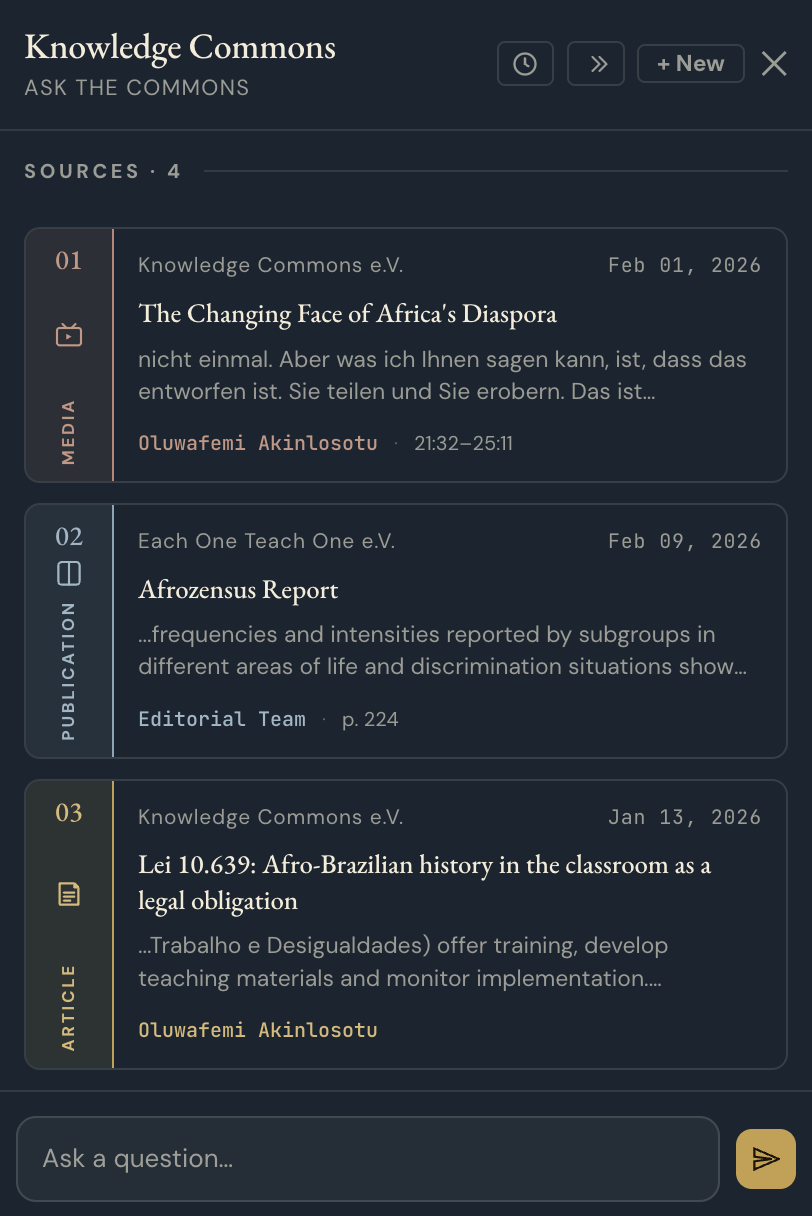
The Commons lets approved civic knowledge become discoverable together: one shared question surface over many independent archives, with every answer cited back to the organization it came from.
- Opt-in per item — nothing shared by default
- Attribution preserved to the owning organization
- Withdrawal supported at any time
- Eligibility review before anything goes Commons
- Workspace permissions remain separate
Impact you can show — linked to the source.
The evidence you already hold can become donor-ready proof, project collections, and public campaign pages — with each claim traceable to its source.
Impact evidence linked to source
Every impact claim points back to the report, recording, or update behind it.
Project collections
Group evidence by programme or grant, ready to revisit at reporting time.
Evidence-backed pages
Share a cited, current view of the work — no manual rebuild each cycle.
Public campaign pages
Publish campaign evidence under your identity, powered by the archive.
Organization profile in Commons
An optional public profile of your shared work in the Knowledge Commons.
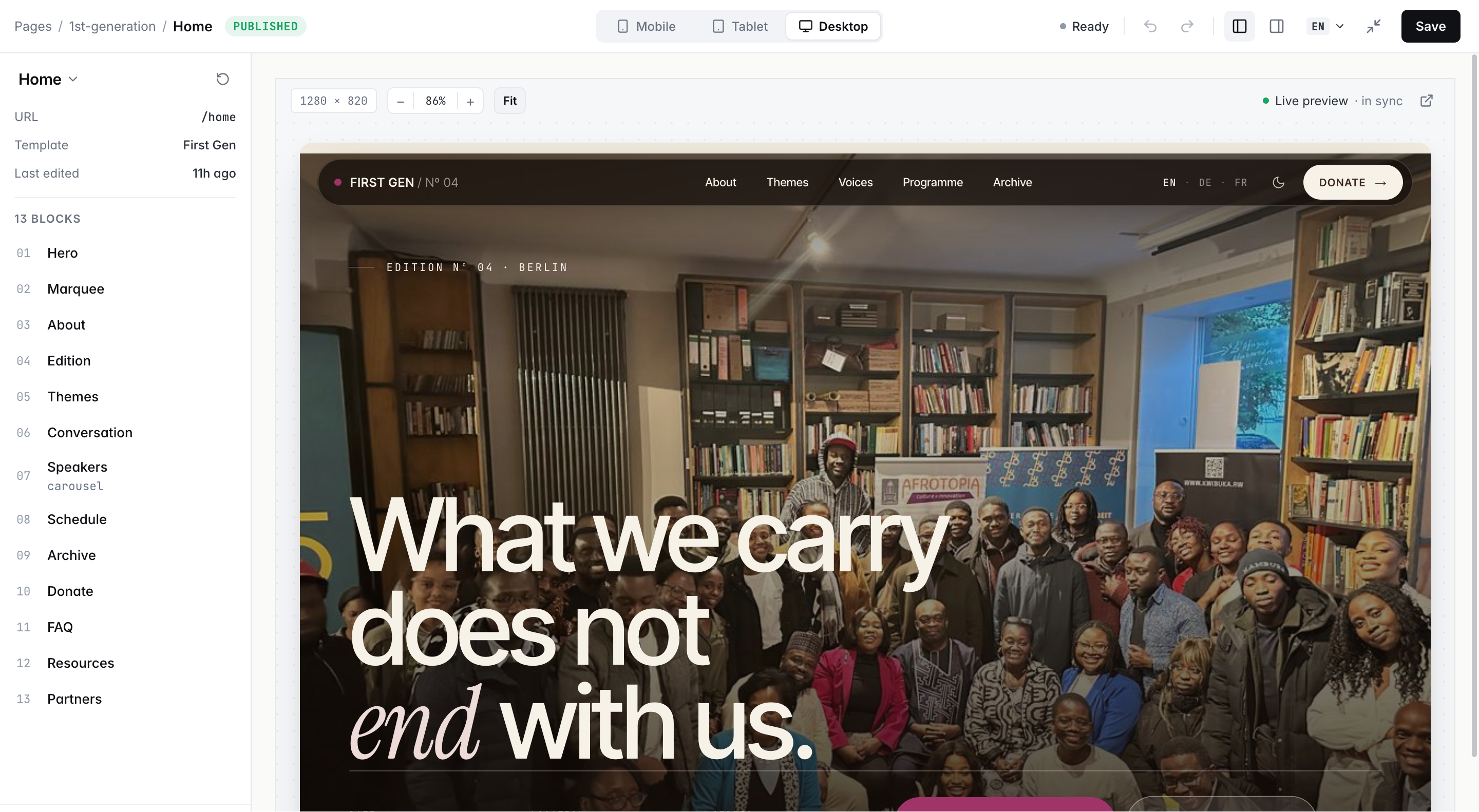
Knowledge leads to participation.
When someone finds the evidence, the next step should be easy to take — not a hard sell. A public resource becomes a way in.
Add evidence search to your site — or launch from a template.
Keep the website you have and add evidence search, campaign pages, and cited resources — or launch a full civil-society site from a template. Same archive, same permissions, same source trail.
Embed into your existing site
Drop-in- Resource search
- Campaign evidence widget
- Report library
- Donation CTA
- Commons badge
- Multilingual
Launch from a template
Public site · mobile-ready- Programs
- Reports
- Campaigns
- Impact pages
- Donation paths
- Multilingual public resources
Nothing goes public by accident.
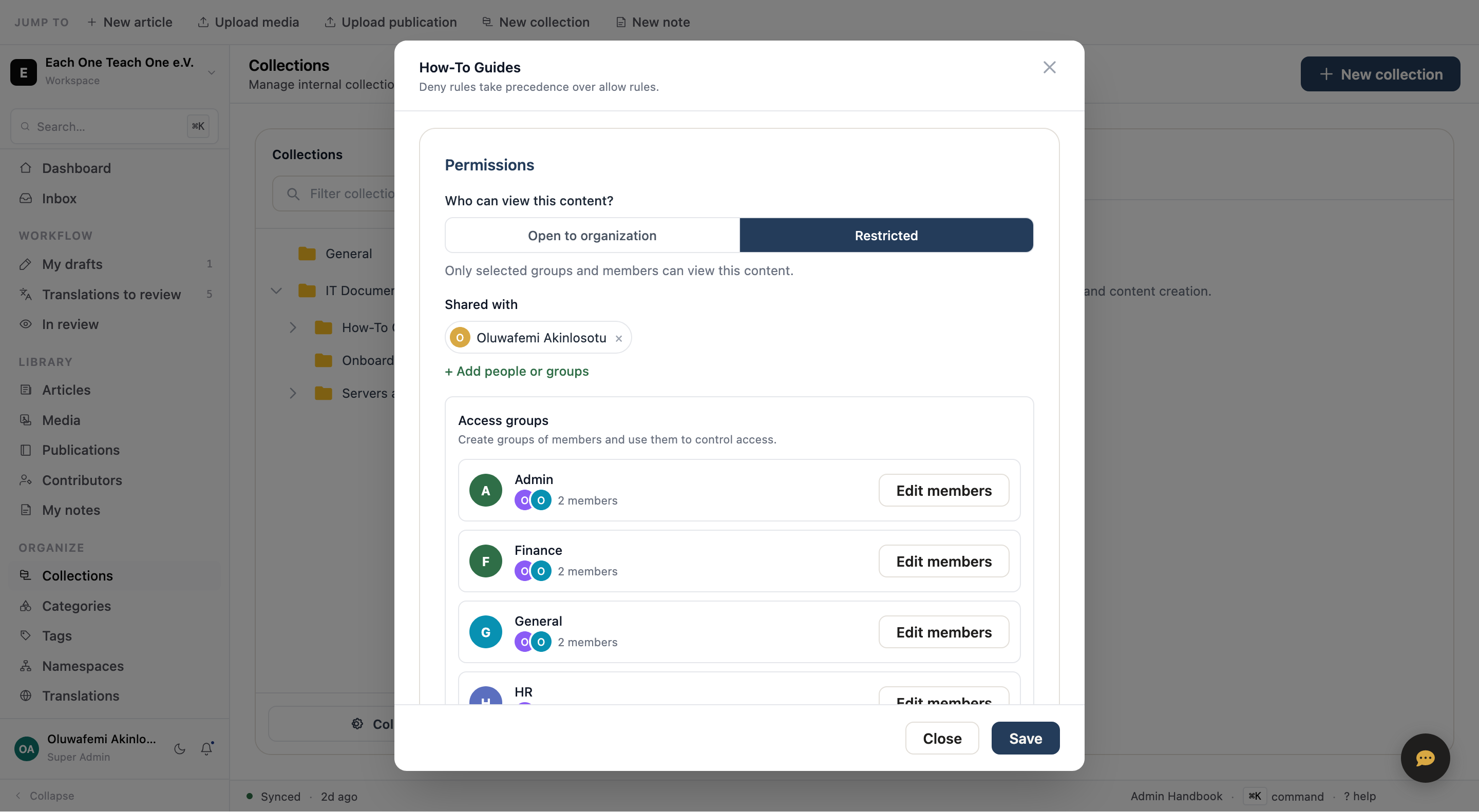
Visibility, consent, and redaction are operational controls — visible on every item, every approval, and every export.
Visibility rules
Private, public, or Commons — set per item and per collection.
Redaction notes
Redact sensitive detail while keeping the evidence usable and traceable.
Consent status
Track consent on testimony and personal material before anything is shared.
Commons eligibility review
A deliberate review step before any item enters a shared surface.
Publishing approvals
Approvals gate what becomes public, with a clear record of who signed off.
Audit trail
EU-hosted by default, with traceable activity across the archive.
Start with the material you already hold.
Your pilot starts with existing reports, trainings, recordings, and campaign material. Your team can test a searchable archive, prepare a public evidence site, and decide what should stay private, go public, or become Commons-eligible.
- ✓Start from existing reports, trainings & recordings
- ✓Build a searchable evidence archive
- ✓Prepare a public evidence site
- ✓Choose Commons eligibility
- ✓EU hosting with consent controls
Frequently Asked Questions
Straight answers on sensitive material, Commons opt-in, donations, partners, and the line between private and public.
Can sensitive reports and field material stay private? +
Yes. Internal reports, field notes, partner documents, draft material, and sensitive recordings stay inside a private workspace. Public pages and shared discovery surfaces use only material your team has approved for publication.
How does Loracta handle consent and contributor-sensitive material? +
Consent-sensitive material is managed with visibility rules, redaction notes, review status, and publishing approvals. This matters for field recordings, testimony, interviews, community stories, and partner-submitted material.
Can Loracta help us avoid publishing sensitive or unsafe information? +
Yes. Sensitive resources remain private until reviewed. Review status, visibility rules, redaction notes, and publishing approvals reduce the risk of exposing personal, partner-sensitive, field-sensitive, or politically sensitive material.
Can different teams, projects, or partners have different permissions? +
Yes. Access can be separated by team, project, programme, partner, collection, workspace, or publishing status, so internal knowledge, restricted partner material, and public communication stay governed from one system.
Is our private content used to train public AI models? +
No. Private archive content is not used to train public AI models. Your approved material powers search, retrieval, summaries, translations, and assistant responses inside your configured workspace.
Can we migrate reports, PDFs, recordings, and campaign material from Drive or our website? +
Yes. Your pilot can start with scattered material from shared drives, websites, PDFs, videos, audio recordings, campaign pages, training documents, and reports. The goal is to make existing work reusable, not force your team to rebuild everything first.
Can we use Loracta without joining the Knowledge Commons? +
Yes. Your organization can use Loracta as a private workspace, internal archive, public website, or organizational knowledge system without joining shared Commons surfaces. Commons participation is optional and controlled by your organization.
Is there nonprofit or sponsored civil-society pricing? +
Nonprofit-oriented pricing and sponsored access models are available where appropriate. Pricing can reflect archive size, public-site needs, Commons participation, support requirements, and available sponsorship.
Can donors verify the evidence behind our impact claims? +
Yes. Impact pages connect claims back to reports, project updates, recordings, campaign material, and other approved sources, helping supporters see the evidence behind the story.
Can Loracta support funder reporting or impact storytelling? +
Yes. Approved reports, project updates, media, testimonies, campaign material, and programme documentation can become evidence-backed public or internal pages, so impact stories stay connected to their sources.
Can public resources connect to donations, campaigns, events, or volunteering? +
Yes. Public knowledge can lead naturally into action: donating, volunteering, joining a campaign, attending an event, subscribing, or contacting the organization. The point is not just to publish information, but to help people understand the work and support it.
Does Loracta handle donations directly? +
No. Loracta connects knowledge to participation — donate, volunteer, subscribe — and links out to the donation tools you already use. It is not a payment processor.
What about multilingual supporters and audiences? +
Answers and resources can work across the languages your organization supports. Translations are reviewed before publication, and the original source stays attached throughout.
Can we choose exactly what enters the Knowledge Commons? +
Yes. Commons participation is opt-in. Your organization decides which approved public resources can appear in shared discovery surfaces and which material remains private, restricted, or available only on your own site.
Do we keep our own identity and attribution in shared Commons surfaces? +
Yes. Shared discovery does not erase organizational identity. Approved resources retain attribution, source links, publishing context, and the organization, project, or contributor they came from.
What happens if a partner wants material removed from a shared surface? +
Shared material remains governed. If a partner withdraws approval or a resource needs correction, the item can be removed, revised, or unpublished according to the agreed governance process, while preserving an appropriate audit trail.
Make your evidence answerable.
Start with what you already hold — reports, trainings, recordings, and campaign material. In the pilot, your team can test a searchable evidence archive, a public evidence site, and governed visibility for private, public, or Commons-eligible material.